FAQs
Q: What does “Organic” mean?
So, when you see a food item labeled “Organic,” it means that the produce was grown or raised in a very specific way. The farm has to be certified Organic, and that usually takes at least two years.
In simple terms, the land must be free from all man-made chemicals like insecticides, pesticides, and herbicides. Only organic crops can be grown. Farmers have to rotate what they plant. This breaks up the life cycles of pests and helps to create a more diverse ecosystem.
Organic farmers also rely on plowing, weeding, and encouraging good insects to keep pests away. They only use organic plant and animal manures, so the soil stays healthy and doesn’t get eroded.
Q: How do I know if food is Organic or not?
The primary organic certification bodies (OCBs) in Ireland, approved by the Department of Agriculture, Food and the Marine (DAFM) to inspect and license organic operators under EU regulations, are the Irish Organic Association (IOA) and the Organic Trust Limited (OT). They conduct annual inspections to ensure compliance with strict organic standards.
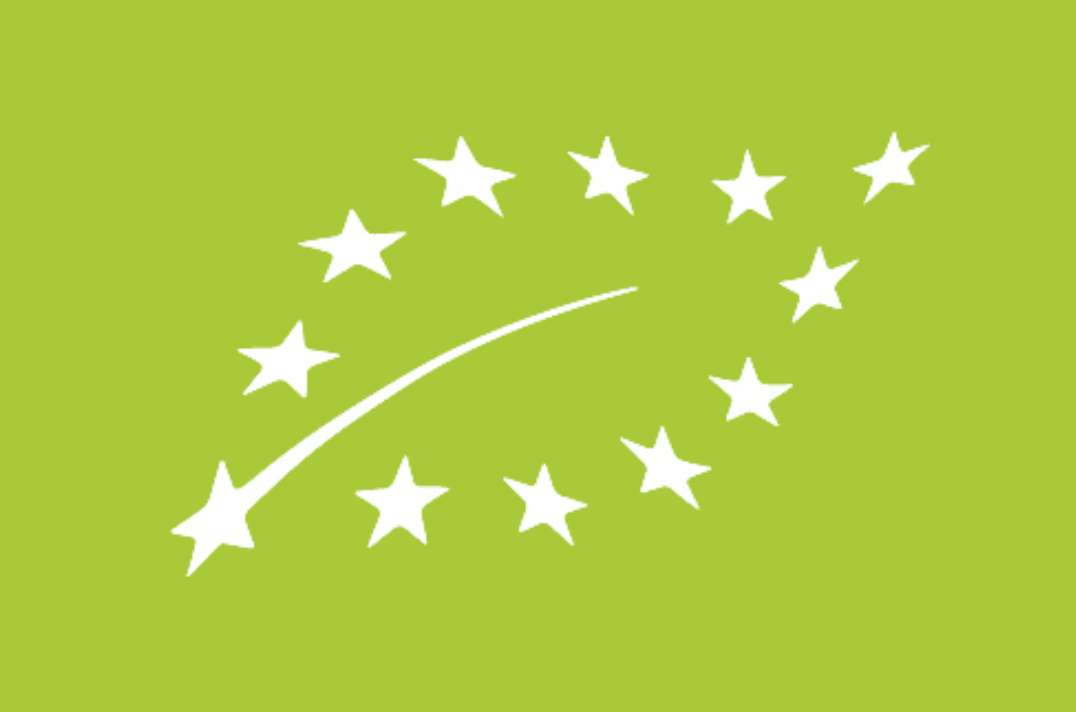
Packaged items will have the EU logo in their label as shown here. This is your guarantee that it is certified as Organic.
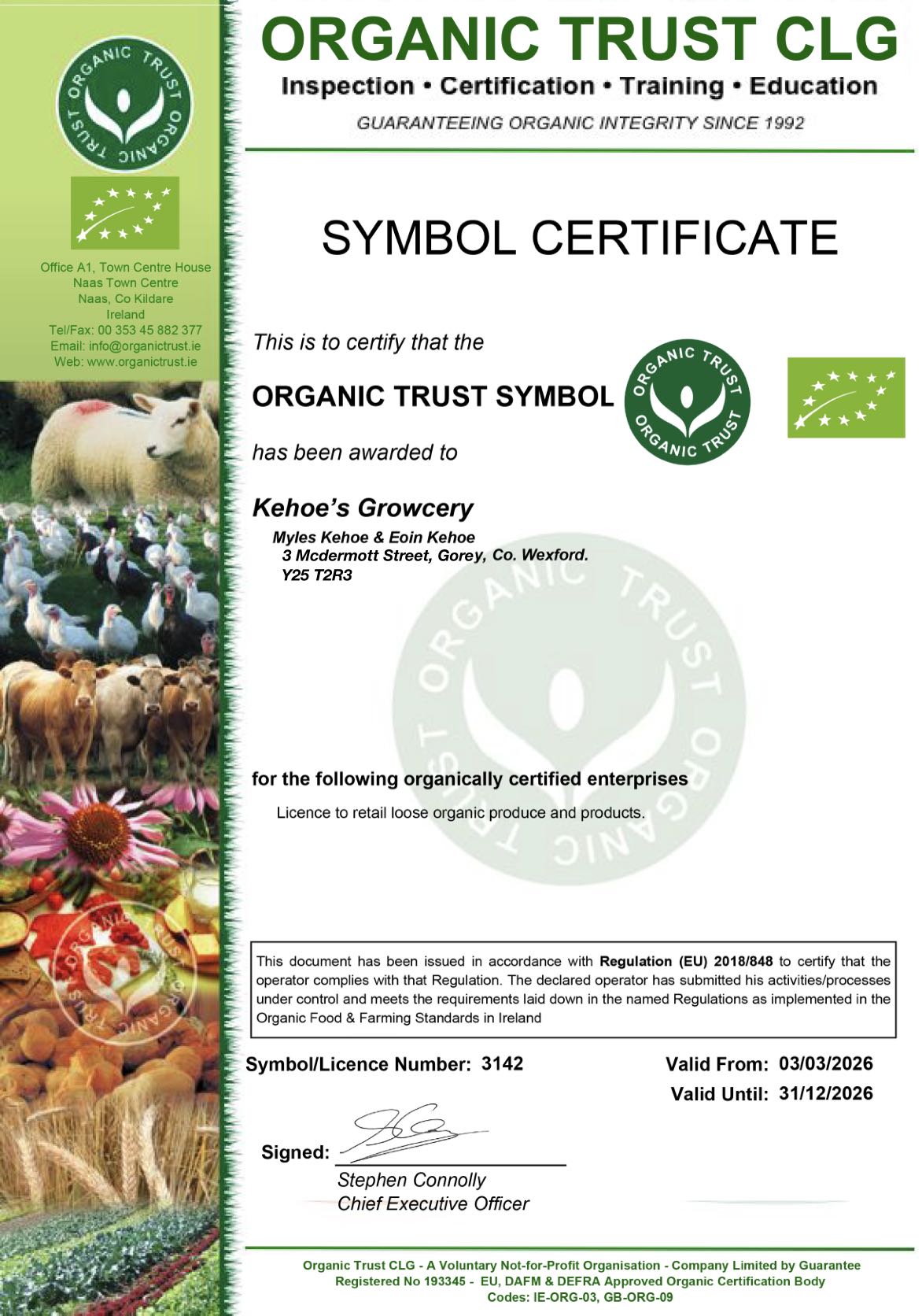
For unpackaged or loose items, the retailer must be certified by an OCB, in our case we have been certified by the Organic Trust.
Q: This whole “Organic” thing, it’s just a passing fad isn’t it?
Eh, No! All farming was Organic until the 1960’s! This is when ‘intensive’ production started to come in. In order to maximize output we saw the introduction of chemical pesticides, insecticides, & herbicides. In the last thirty years we have seen the introduction of GMOs. All to maximize production and image. Ask yourself, how often do you peel your fruit and vegetables rather than just washing them? Now ask yourself why?!! After all the skin contains most of the flavour! Could it be that this is where a lot of chemicals land?
Q: What are the benefits of Organic food production?
First of all, it’s great for the environment. It doesn’t cause as much damage to the land and helps to create a more diverse ecosystem. Plus, it reduces water pollution. Organic fertilisers improve soil health and help to prevent soil erosion. Organic farming also uses less energy.
Secondly, it’s great for animal welfare. Organic farming focuses on disease prevention, so animals and birds have access to the outdoors and aren’t kept in crowded conditions indoors. This means they’re happier and live much longer.
Lastly, Organic food is healthier for you. It has more vitamins, minerals, nutrients, antioxidants, and Omega 3. It doesn’t contain GMOs, artificial preservatives, colourings, or flavour enhancers. Organic food can help to boost your immune system and may even reduce the risk of allergies and obesity.
So, there you have it! Organic food is not only good for the environment and animal welfare, but it’s also healthier and tastier for you.
Q: What’s the difference between ’Organic’ and ‘Free - Range’?
A: Well, let’s start by saying that Organic is Free - Range, but Free - Range isn’t necessarily Organic. Free - Range is a term we often see when it comes to Poultry and Eggs, and it’s pretty much self-explanatory. The birds have access to the outdoors, which is why they’re called ‘free - range’. Now, to be called ‘Organic’, there are some other conditions that need to be met. Please see the first question above for more details!
Q: What’s the best Organic Irish Honey?
A: Well, there’s no such thing as a native Irish Organic honey. The reason for this is that the bees don’t have a large enough roaming area over organic-certified land. So, there’s no way to be sure that the pollen they collect comes from an organic source.
THIS IS OUR FAQs PAGE
(currently under construction)